thermal scene generation
Thermal Scene Generation
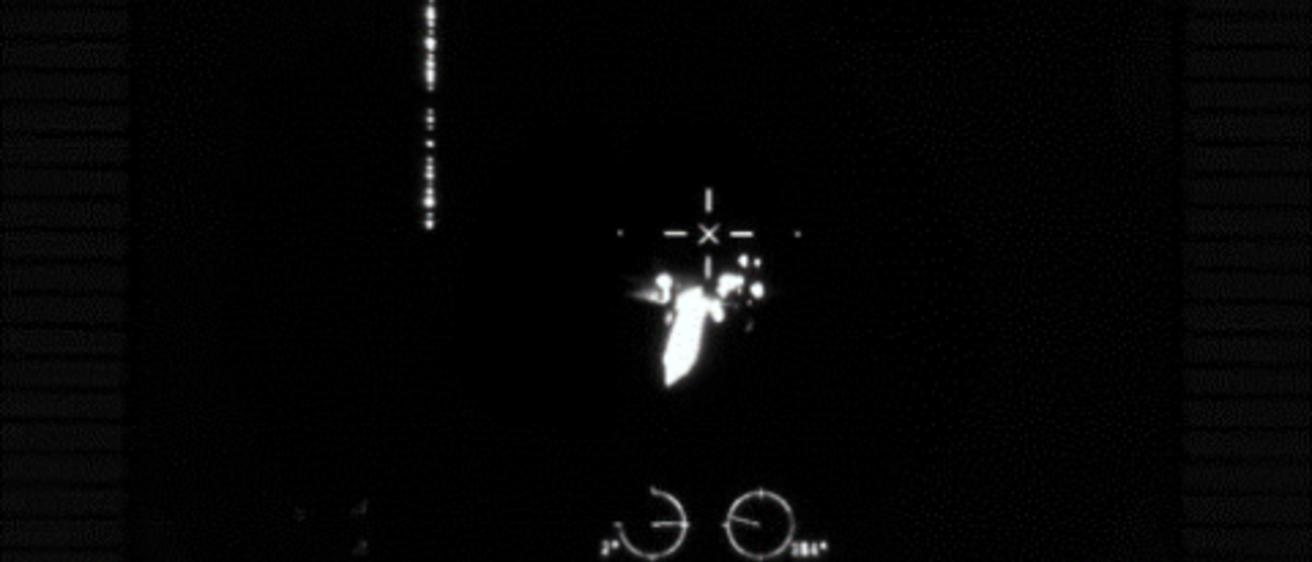
Thermal scene generation is a technology used to test and evaluate infrared imaging systems such as thermal cameras and missile seekers. In these systems, arrays of infrared emitters produce spatially and temporally varying patterns of infrared radiation that simulate the thermal appearance of real-world objects. Instead of recording a scene like a camera sensor, the emitter array generates a dynamic infrared scene, functioning in many ways like a television display operating at infrared wavelengths.
Our research focuses on developing semiconductor emitter arrays capable of producing realistic thermal scenes with high radiometric output, high frame rates, and large pixel counts. These systems are used for hardware-in-the-loop testing of infrared sensors, where the performance of imaging systems can be evaluated under controlled and repeatable conditions.
A major challenge in this field is creating emitters that combine:
- High optical efficiency and radiance
- Fast temporal response and high modulation bandwidth
- Large-format arrays with high yield and uniformity
Our group explores superlattice light-emitting diode (SLED) arrays and related semiconductor emitter technologies for this purpose. Compared with conventional thermal emitters, semiconductor emitters offer advantages in modulation speed, efficiency, and scalability, enabling the development of high-performance infrared scene projectors.
By integrating advances in semiconductor materials growth, device physics, and microfabrication, our work aims to create next-generation emitter arrays capable of generating complex infrared scenes for sensor testing, defense applications, and advanced infrared imaging technologies.